Books & Videos


If you have any questions about our products please give us a call at (423) 261-2039 or email us at your convenience.


If you have any book or video recommendations for this site, please email Wild Pantry.


This is a list of recommended reading on the subject of wild foods, foraging, paleo diets, etc.  


The Wild Food Trailguide

This new edition of a book that Explorer magazine called “an indispensable field guide to the most common edible plants of North America” offers 85 plants that are not only edible, they are truly worth eating. This guide is as much fun to browse as it is to use.   

Many of the plants we call weeds were brought here by settlers. Our grandparents still knew where to find them, how to use them and when to harvest.. They are not confined to the wilderness but can be found in your backyard or along roadsides--even on urban expressway margins and vacant lots. 

More than 25 uses—from salads and seasonings to jams and pies—can add variety to meals and really cut rising food costs.  This guide makes harvesting nature’s free bounty sure, safe and easy.  It is, as noted by the New York Times, “extremely well organized.”  Each plant is described in clear, non-technical terms and each is illustrated. The text clearly spells out the part of the plant that is edible, when to collect it and how to prepare it.

 Product Description


This new edition of a book that Explorer magazine called "an indispensable field guide to the most common edible plants of North America" offers 85 plants that are not only edible, they are truly worth eating. This guide is as much fun to browse as it is to use. Many of the plants we call weeds were brought here by settlers. Our grandparents still knew where to find them, how to use them and when to harvest. They are not confined to the wilderness but can be found in your backyard or along roadsides -- even on urban expressway margins and vacant lots. More than 25 uses -- from salads and seasonings to jams and pies -- can add variety to meals and really cut rising food costs. This guide makes harvesting nature's free bounty sure, safe and easy. It is, as noted by the New York Times, "extremely well organized." Each plant is described in clear, nontechnical terms and each is illustrated. The text clearly spells out the part of the plant that is edible, when to collect it and how to prepare it.

About the Author

Alan Hall passed away in February, 2011. He will sadly be missed.


Alan Hall was a journalist, author and teacher with a career that spanned nearly four decades. He graduated from Cornell University with majors in Journalism and science writing in 1967. He moved to New York to pursue a career but had a weekend house (a run down farm) near Cornell. Because his father was a botanist and naturalist, he took to rural life and learned plant lore. He took a leave of absence and moved to the upstate NY farm and produced much of the manuscript there. Later, Hall became senior editor in charge of science, environment and energy coverage at Business Week. He also served as Executive Editor at Scientific American magazine. Later, he taught online courses in journalism at the University of Massachusetts in Amherst. Hall received numerous journalism awards, including the AAAS/ Westinghouse Journalism Award, and was a recipient of the McGraw-Hill Corporate Achievement Award. His projects have both won and been finalists for the prestigious, National Magazine Award.


Click here to order book.
 
Email  if you want to order.


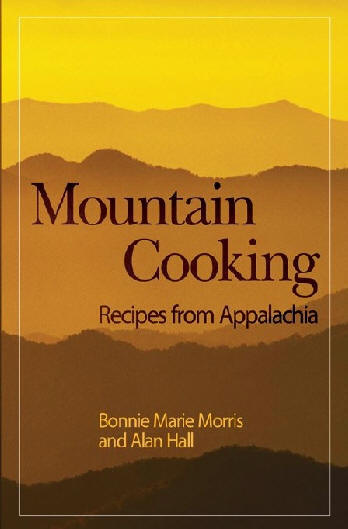
Mountain Cooking - Recipes from Appalachia

Mountain Cooking - Recipes from Appalachia

Just Published! Click here for information on our new book.

An illustrated cookbook with commentary. Mountain Cooking is a collection of recipes—some new and others very old, with commentary. It introduces Appalachian food--a unique blend of the recipes brought by settlers --Cajun, French, German, Scots, escaped slaves and those prepared by the native Cherokee. These recipes represent a merging of all the cuisines of the people who live in the high country from New York south to Georgia.  Mountain food is born of fresh ingredients, wild plants and game. It fed small farmers with little ground. They hunted a great deal and gathered what was wild.

The mountaineers were cash poor but masters of self sufficiency.  They farmed what the mountain land would support and made the best of it.  Mountain cooking is not “Southern.” It is truly, “Mountain Food.”  It is, quite simply “Soul Food.”  Some recipes are very old others more recent.  But these are all dishes you can find today on tables throughout Appalachia. The Authors:  Alan Hall now lives and writes in Amherst, MA . He is the author of The Wild Food Trailguide, a guide to edible plants. Bonnie Marie Morris  is an avid wild food forager and herbalist. Her business, Wild Pantry, collects native plants for food and medicinal use.  

Mountain Cooking can be ordered from Amazon.  Local booksellers may have it or can order it.  If you have trouble finding a copy, email Bonnie Marie Morris.   Publisher: Amazon/ Booksurge - List price: $20.99 Pages: 208 - ISBN: 1-4392-5523-7 Copyright 2009, Bonnie Marie Morris and Alan Hall


Buy both books - Mountain Cooking - Recipes from Appalachia and the Wild Food Trailguide for

$30.00 - email to order


Books we recommend (Amazon links):


More interesting books


Foraging Books


Wild Mushrooms


Medicinal Plants, Herbs, Medicinal Mushrooms & Holistic Health


Wild Cooking Recipe Books


Ethno-botany


Wilderness Survival


Dining On The Wilds
with Miriam Darnall-Kramer & John Goude

The quality of primitive skills and edible plants videos varies widely. Some videos have really good information, but they would almost kill you with boredom. Other videos are fun to watch, but not terribly informative. The challenge is to make a video that both educational and captivating to watch. The Dining On The Wilds videos have mostly good informative content, but not a very exciting presentation of it. Personally, I would prefer to read it from a book. However, if you are a person who learns better from the video format, then these tapes are for you.

The Dining On The Wilds videos includes six tapes covering more than 300 species of plants. Although there is a definite slant towards southern California plants, Kramer and Goude do a nice job of representing the most important edible plants all across North America. Also included is the 167 page Dining On The Wilds Reference Manual by Miriam Kramer. One of the greatest assets to these videos is the demonstrations of skills like threshing grain, acorn processing, primitive cooking, harvesting prickly pear cactus, and harvesting cattails. I recommend using these videos with
Botany in a Day. Look up the names from the video in the index of Botany in a Day to learn the essential family information.


   "Wildman Steve Brill" with Japanese Knotweed

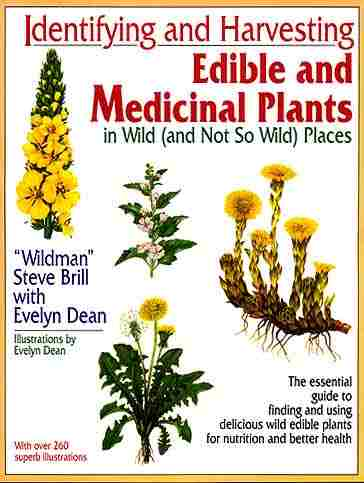
Wildman Steve Brill's site is the Number One site to find out about WILD FOOD!  He is this century's best known Naturalist.  I personally have a copy of his book, "Identifying and Harvesting Edible and Medicinal Plants in the Wild (and Not-So-Wild) Places," and rate it a Number One in information.  It is packed with information for the novice to the serious forager.


If you purchase this book in a bookstore or elsewhere online, the book seller gets most of the money.

Purchase an Autographed Copy from the Author.

  "The Wild Vegetarian Cookbook, " by Wildman Steve Brill.  

Read excerpts of this book

Buy a signed copy from the author now!

Here's a unique guide to gourmet vegan cooking you can use with or without wild ingredients. It includes close to 600 original recipes, some of which you'll find published on this site.

You'll learn the best ways to prepare dozens of delicious, common edible wild plants, how to use other natural ingredients and seasonings to enhance any dish you prepare, and ways to substitute healthful ingredients for unhealthful ones.

You'll get to make many vegan cheese substitutes that taste way better than the fake cheeses they sell in health food stores, and you'll get to use them in healthful, traditional-style recipes.

You'll be able to enjoy many varieties of easy-to-make dairy-free, sugar-free ice cream, much tastier than the most expensive commercial gourmet brands.

You'll even find out how to make an omelet without breaking an egg!

"Wildman" Steve Brill's research into natural food preparation first led him to begin studying wild foods in the early 1980s. Enjoy the fruits (and berries, nuts, seeds, roots, herbs, greens, mushrooms, and seaweeds) of his experiments in this entertaining, practical field guide to natural foods preparation.


Videos

  Foraging With The "Wildman." - Part I Wild Edible Basics - A video series dedicated to the edible and medicinal wild plants and mushrooms of North America. 

If you have any questions about our products please give us a call at (423) 261-2039 or email us at your convenience.


Templates in Time